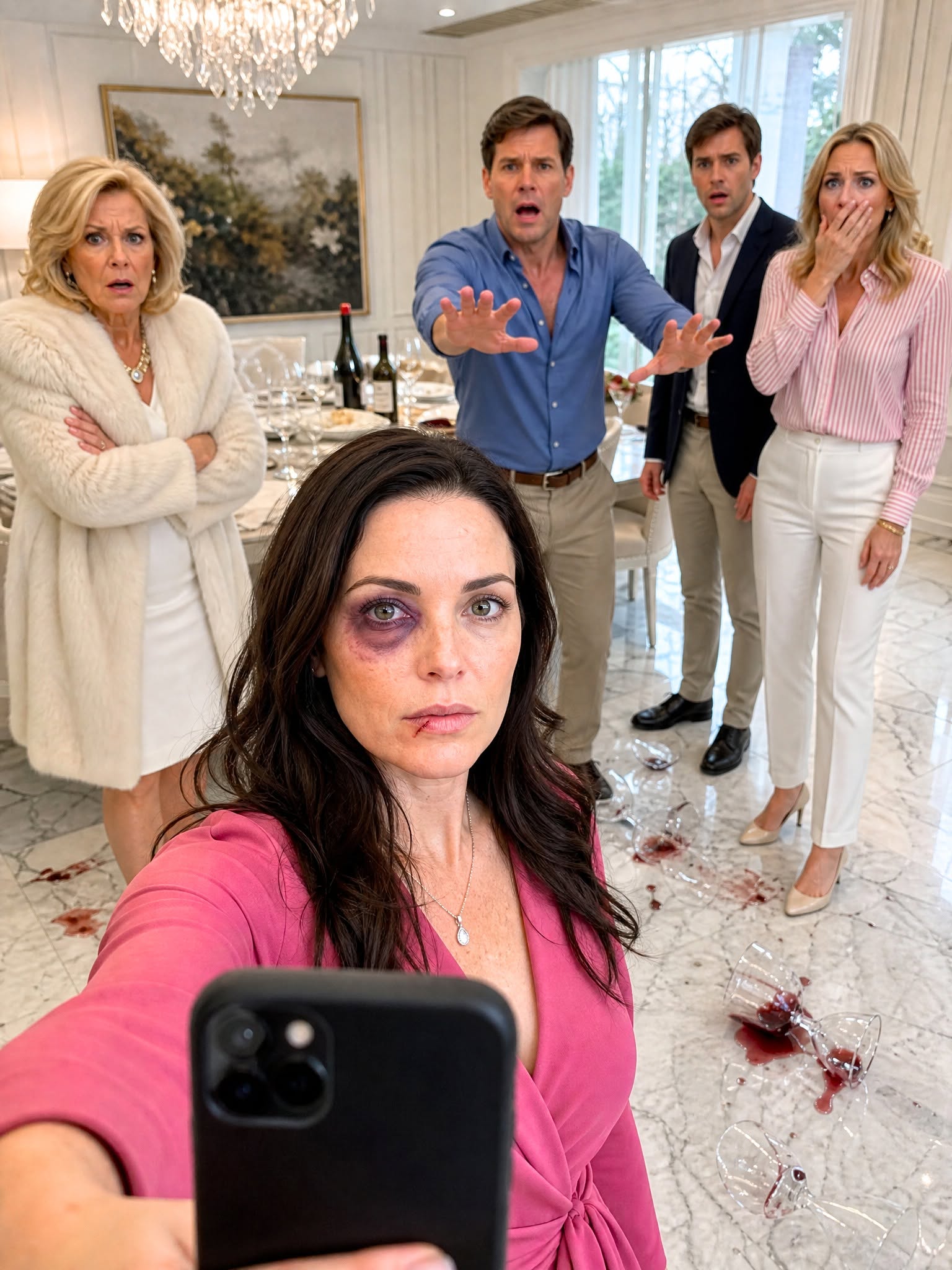
About an hour later, Marcus walked into my office holding a printed email recovered during the procurement review.
“You need to see this.”
The message had been sent by Ethan to one of his operations managers.
“Just push the shipment through code clearance. My wife runs the financial oversight committee. She’ll smooth it over.”
I stared at the screen in silence.
For years, I thought they were only using my bank account.
I had just discovered they had been using my professional reputation too.
That evening, Beatrice uploaded a tearful video outside a hospital, accusing me of abandoning her sick husband and ruining Ethan’s career out of spite. Within hours, strangers flooded my social media accounts with insults, convinced they knew the entire story.
I didn’t respond.
I simply saved every post, every message, every screenshot, and every timestamp.
Because inside the blue folder on my desk…
I already had everything I needed.
Part 3: The Bill Finally Came Due
The weeks that followed moved quickly. My attorney filed for divorce, the forensic report was submitted with the court, and every financial record we had gathered became part of the case. What began as a domestic violence claim soon expanded into something much larger as investigators reviewed the procurement contracts Ethan had proudly claimed were won through his own hard work.
The internal audit uncovered exactly what I had feared. Ethan had repeatedly used my executive position to influence purchasing decisions, while several contracts involving his company bypassed normal compliance procedures. Emails showed that he had openly relied on my name and professional reputation to reassure clients and vendors, even when I had never approved the transactions myself.
A month later, Ethan called me for the first time since security escorted him out of my office.
“Maya, please. We can fix this.”
I remained calm.
“There’s nothing left to fix.”
“You’re destroying my career.”
“No. I stopped protecting it.”
He grew quieter.
“I never meant for any of this to happen.”
I looked at the stack of evidence sitting on my desk.
“You meant for me to keep paying. You meant for me to stay silent. You just never expected me to leave.”
The divorce hearing arrived several weeks later. Beatrice sat behind Ethan wearing black as though she were attending a funeral, while Julian and Chloe avoided looking in my direction altogether. Arthur appeared older and weaker than I remembered, and although he never defended me, he finally admitted under oath that he knew I had been paying far more than anyone outside the family realized.
When the judge reviewed the financial records, the courtroom became noticeably quieter. Every monthly transfer, every luxury purchase disguised as an emergency, and every payment connected to Ethan’s family had been carefully documented over five years.
After reviewing the evidence, the judge looked directly at Ethan.
“Financial support given voluntarily does not create permanent entitlement.”
Those words seemed to drain the last bit of confidence from Beatrice’s face.
Outside the courthouse, reporters gathered around Ethan after news of the procurement investigation became public. He tried to describe everything as a misunderstanding, but by then the audit findings and internal emails spoke far louder than any explanation he could offer.
Several months later, I received confirmation that the divorce had been finalized. I also learned that Ethan had lost his position after the company’s board completed its investigation, while Beatrice was forced to sell several luxury items she had once insisted were family necessities.
Marcus stopped by my office that afternoon carrying two cups of coffee.
“How does it feel?”
I smiled for the first time in a long while.
“Quiet.”
He laughed.
“I’ll take that as a good sign.”
“It is.”
That evening, I returned to my apartment overlooking the Boston skyline and placed the blue folder labeled Boundaries into my filing cabinet. I didn’t keep it because I wanted to remember the betrayal. I kept it because it reminded me what happens when kindness is mistaken for obligation.
For years, I believed saying yes made me a good wife.
I finally learned that saying no saved my life.
The money they took could eventually be earned again.
My self-respect was worth far more.