What This Item Is
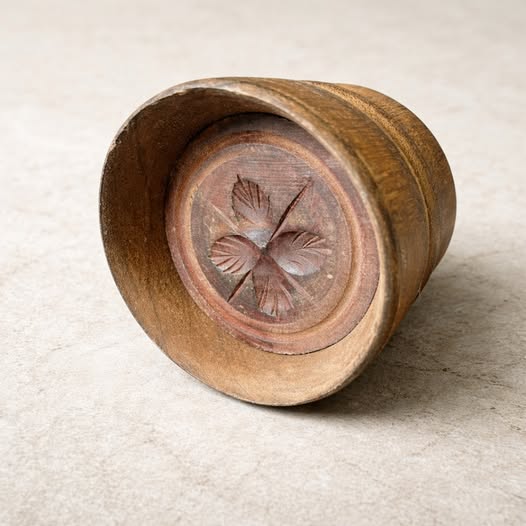
The object shown is an antique primitive carved wooden butter press, also commonly called a wooden butter mold or butter stamp. It is a round wooden mold with a carved flower motif on the face. These tools were used to shape, portion, and decorate butter—turning a simple farm product into a neat, recognizable, and often market-ready form.
Name and Common Terms
- Primary name: Antique carved wood butter press
- Also known as:
- Wooden butter mold
- Butter stamp
- Butter press mold
- Primitive butter mold (farmhouse/folk tool)
-

When It Dates From
- Most consistent identification for this style is the early 1900s (often broadly listed as “1900s”).
- Similar wooden butter molds were widely used from the late 1800s into the early-to-mid 1900s, especially in home dairying communities.
Who Made It
In most cases, pieces like this were not made by a single famous inventor. Instead, they were typically produced by:
- Local woodworkers or village craftsmen
- Farm-tool makers and small workshops
- Household artisans (in some regions, a skilled family member carved them)
Important notes on attribution:
- Many butter molds are unmarked, so the exact maker is often unknown unless a stamp, initials, or provenance is documented.
- The flower design was a popular traditional motif because it was easy to read in butter and looked appealing on the table or at market.

What It Was Used For (Main Function)
This tool helped butter-makers create butter that looked uniform, clean, and decorative.
Key uses included:
- Shaping: forming butter into a consistent round shape
- Stamping: pressing the carved face into butter to leave a raised or impressed flower pattern
- Portioning: making similar-sized rounds for serving or selling
- Presentation: improving visual appeal for family meals, guests, or local markets
How It Worked (Simple Step-by-Step)
A typical use process was:
- Prepare butter (often after churning), then cool and work it to the right firmness.
- Load the butter into the round cavity or press it against the mold face.
- Press firmly so the carved flower pattern transfers clearly.
- Release the butter carefully to keep the design intact.
- Optionally, wrap or store the stamped butter for serving or sale.

Design Features You Can Identify in the Photo
- Round wooden body: built to hold and compress butter evenly
- Carved flower face: creates a recognizable decorative stamp
- Smooth outer rim: helps guide pressure and protect the carved surface
- Aged patina and wear: normal for a working kitchen tool of its era
Why It Mattered Historically
Before modern branded packaging and industrial portioning, decorative molds helped butter-makers:
- Signal quality and care
- Offer a consistent product for customers
- Add a small element of craft and identity to everyday food
- Make butter visually suitable for special occasions and hospitality
Collectibility and Modern Use Today
People collect antique butter molds for:
- Farmhouse kitchen décor
- Folk-art woodcarving displays
- Culinary heritage collections
- Occasional food-styling or traditional butter stamping (if food-safe condition is verified)