Close Menu
Press24.click
  • Home
  • Technology
  • Gadgets
  • Gaming
  • Latest
  • Contact Us
  • Privacy Policy
  • Terms and Conditions
What's Hot

My Mother Banned Me From My Own Lake House—So I Sold It While My Family Was Still Partying Inside

September 11, 2026

My Eight Year Old Son Came Home From His Mother’s House Looking Quiet and Withdrawn, So I Made the One Phone Call That

September 11, 2026

I never told my in-laws that I am the daughter of the Chief Justtice of… –

September 11, 2026
Facebook X (Twitter) Instagram
Press24.clickPress24.click
  • Home
  • Technology
  • Gadgets
  • Gaming
  • Latest
  • Contact Us
  • Privacy Policy
  • Terms and Conditions
Press24.click
Home » SCOTUS Decision On Mail-In Voting Rules Could Impact Elections Going Forward
Latest

SCOTUS Decision On Mail-In Voting Rules Could Impact Elections Going Forward

Andrew PowellBy Andrew PowellMarch 12, 20262 Mins Read
Share Facebook Twitter Pinterest LinkedIn Tumblr Reddit Telegram Email
Share
Facebook Twitter LinkedIn Pinterest Email

The U.S. Supreme Court is at the center of a legal battle over how mail-in ballots are handled — a dispute that experts say could have wide-ranging effects on future elections, including how votes are counted and how election laws are challenged in court.

What’s at Issue
At the heart of the controversy is a debate over whether states may count mail-in or absentee ballots received after Election Day so long as they were postmarked by Election Day. Dozens of states currently allow ballots to be counted even if they arrive days later, a practice that expanded dramatically during the COVID-19 pandemic to accommodate voters.

In November 2025, the Supreme Court agreed to review Watson v. Republican National Committee, a case challenging a Mississippi law that permits ballots postmarked by Election Day to be counted if received within five business days afterward. If the Court ultimately decides that federal election statutes require ballots to be received by Election Day, it could upend similar laws in many states. (Wikipédia)

What the Court Has Already Ruled
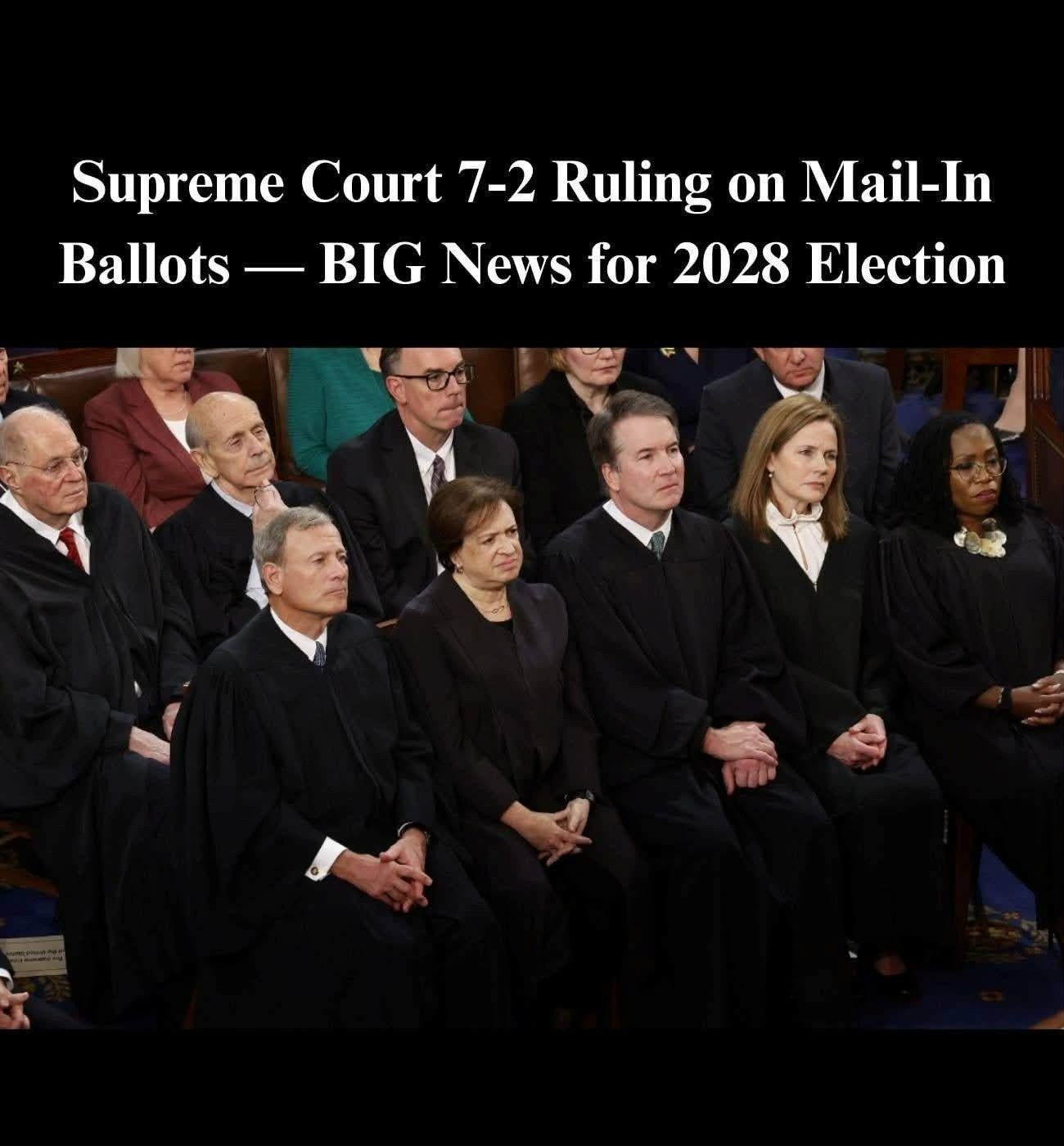
In early 2026, the Supreme Court issued a key ruling in Bost v. Illinois State Board of Elections — not about whether late-arriving ballots are lawful, but about who has the right to challenge election rules. By a 7–2 vote, the Court held that federal candidates do have legal standing to sue over how election laws are written and applied. This decision may open the door to more legal challenges over voting procedures ahead of future elections.

Share. Facebook Twitter Pinterest LinkedIn Tumblr Email

Related Posts

Latest

Three guys are having a few beers

June 7, 2026
Latest

A married couple were asleep when the phone rang

June 6, 2026
Latest

He Saw 6 Feet In Bed So His Wife Made Him Count Again

June 5, 2026
Top Posts

Video: A new see through nighty

June 20, 202612,534 Views

Video: The husband was skeptical

July 30, 202611,056 Views

TXT: I cheated on you

August 2, 202610,058 Views
Stay In Touch
  • Facebook
  • YouTube
  • TikTok
  • WhatsApp
  • Twitter
  • Instagram
  • About Us
  • Contact Us
  • Disclaimer
  • Home
  • Privacy Policy
  • Sample Page
  • Terms and Conditions
© 2026 Powered by press24

Type above and press Enter to search. Press Esc to cancel.