PART 2 — THE SIGNATURE THAT WASN’T HERS
The room suddenly felt colder.
I stared at the paper in Dr. Conner’s hand, trying to make sense of what I was seeing.
My name was printed at the top of the file.
My medical information was underneath.
But the signature at the bottom belonged to someone else.
Someone who had no right to speak for me.
Someone who had spent my entire life convincing people that I was weaker, more fragile, and less trustworthy than I really was.
“Tessa signed this?” I whispered.
Dr. Conner’s expression softened.
“No,” she said carefully. “That’s the part that concerns me.”
My fingers tightened around the blanket.
“Then who did?”
She turned the page toward me.
The signature was familiar.
Too familiar.
My stomach dropped.
It was my mother’s.
For a few seconds, I forgot about the pain in my ribs.
I forgot about the bruises.
I forgot that my body was still recovering from a crash that could have killed me.
All I could see was my mother’s name.
The woman who had held my hand when I was a child.
The woman who was supposed to protect me.
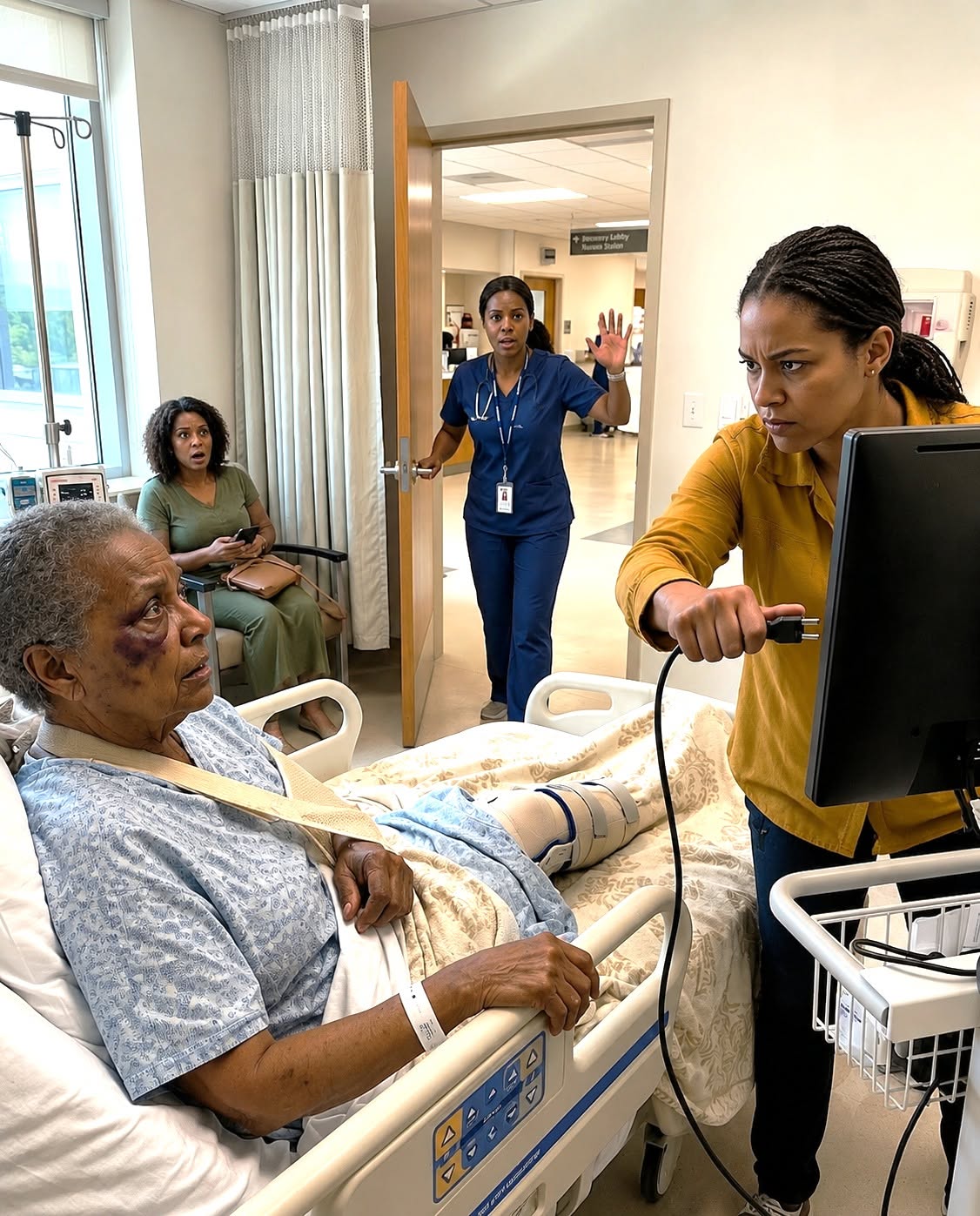
The woman who had just watched my sister unplug my heart monitor and said nothing.
“She told us you had a pattern,” Dr. Conner explained. “She said you often exaggerated symptoms, became emotional during medical situations, and sometimes requested stronger medication than necessary.”
I looked away.
A strange feeling spread through my chest.
Not anger.
Not even shock.
Something worse.
Recognition.
Because this was not new.
This was just the first time someone outside my family had finally seen it.
Growing up, whenever something happened to me, my mother always found a way to make me the problem.
When I was twelve and broke my wrist falling off my bike, she told the doctor I was “sensitive to pain.”
When I was sixteen and had pneumonia, she told relatives I was “always looking for attention.”
When I was twenty-three and ended up in urgent care with a severe infection, she laughed and told the nurse, “She has always been dramatic.”
Every time, I thought maybe I was imagining it.
Maybe I really was too emotional.
Maybe I really was too needy.
Because when the people closest to you repeat the same lie for long enough, you start wondering if the lie is actually the truth.
But lying in that hospital bed, with my sister caught standing over a disconnected heart monitor, I finally understood something.
They did not believe I was dramatic.
They needed other people to believe I was.
Because if everyone thought I was unreliable, nobody would listen when I told the truth.
Dr. Conner closed the folder.
“Your mother had no legal authority to provide a medical history on your behalf while you were unconscious. We’re reviewing how this happened.”
My throat tightened.
“What happens now?”
She looked at me.
“Now, we make sure you are safe.”
That word stayed in my mind.
Safe.
I realized I had spent years trying to earn safety from people who were the reason I needed it.
After Dr. Conner left, a social worker named Melissa came in.
She sat beside my bed, not across from me.
A small detail.
But somehow, it mattered.
People who wanted something from me always stood over me.
People who actually cared sat down.
“Can I ask you something?” she said.
I nodded.
“Has your sister ever hurt you before?”
My first instinct was to say no.
It came automatically.
The same way I had automatically apologized whenever Tessa got angry.
The same way I had automatically defended my mother whenever someone questioned her.
But then I remembered the monitor.
The cord in her hand.
The way my mother looked away.
And for the first time in my life, I stopped protecting them.
“Not like this,” I whispered.
Melissa waited.
So I told her.
I told her about the time Tessa hid my car keys because she wanted me to miss an important interview.
I told her about the family dinners where my mother would laugh and tell everyone my achievements were “luck.”
I told her about how every time I tried to set boundaries, they called me selfish.
I told her how I had spent years shrinking myself just to avoid being called difficult.
Melissa listened without interrupting.
When I finished, she asked one question.
“Why did you still let them visit you here?”
I looked down.
Because the answer embarrassed me.
“Because they’re my family.”
Melissa nodded slowly.
“That’s what many people say when they’ve been taught that love and pain are supposed to exist together.”
Those words hit harder than anything else.
Because I realized I had confused history with love.
Just because someone had known me my whole life did not mean they had treated me with kindness.
The next morning, Detective Harris came to speak with me.
He placed a small recorder on the table.
“We reviewed the hospital cameras,” he said.
My heart started racing.
“What did you see?”
He looked at the screen on his tablet.
“Your sister entered your room alone while you were unconscious.”
I swallowed.
“Okay.”
“She checked whether you were awake.”
My blood went cold.
“Then what?”
“She looked directly at the monitor.”
He paused.
“Then she unplugged it.”
I closed my eyes.
Even though I already knew, hearing it confirmed made my hands shake.
“But there’s something else,” Detective Harris continued.
I opened my eyes.
“What?”
He turned the tablet around.
A security image appeared.
It showed Tessa standing outside my hospital room earlier that morning.
Talking to someone.
My mother.
They were not arguing.
They were not crying.
They were planning.
Detective Harris pointed to the timestamp.
“Your mother arrived forty minutes before you woke up.”
I stared at the picture.
Then he said the words that made my entire body go numb.
“She didn’t come to check on you.”
A silence filled the room.
“She came because she was afraid you would tell us what happened before the crash.”
My breathing stopped.
“What happened?”
Detective Harris looked at me carefully.
“That’s what we’re trying to find out.”
He opened another file.
Inside was a photograph taken from the accident scene.
At first, I only saw my destroyed car.
The twisted metal.
The shattered glass.
Then I noticed something lying near the driver’s seat.
Something the police had recovered before the vehicle was removed.
Something that changed everything.
A small envelope.
With my name written across the front.
And underneath my name were five words.
“Open this if I disappear.”