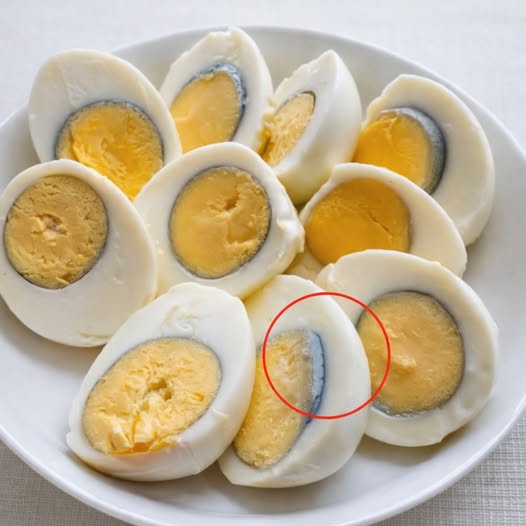
You slice open a hard-boiled egg and see it: a greenish-gray (sometimes green-black) ring around the yolk. It can look unappetizing, but the good news is simple: the egg is still perfectly edible. The ring is a cooking issue, not a sign that the egg has “gone bad.”
What the Green Ring Actually Means
That discoloration is a classic sign the egg was cooked too long (or stayed hot too long after cooking).
Here’s what’s happening at the yolk’s surface:
The yolk contains iron.
The white produces hydrogen sulfide when heated.
When the egg is overcooked, iron from the yolk reacts with hydrogen sulfide from the white, creating iron sulfide right where the yolk meets the white.
The result is that greenish-gray ring.
Is It Safe to Eat?
Yes. Even if it looks unpleasant, the green ring is harmless, and the egg can still taste completely fine. The main downside is appearance (and sometimes a slightly drier texture if it was seriously overcooked).
How to Prevent the Green Ring
The fix is straightforward: avoid overcooking and stop the cooking process quickly.
Follow this reliable method:
Use a saucepan large enough to hold the eggs in a single layer.
Cover the eggs with water.
Bring the water to a boil, then turn off the heat immediately.
Cover with a lid and let the eggs sit in the hot water for 15 minutes.
Drain and run cold water over the eggs to stop the cooking.
Peel when ready and enjoy bright yellow yolks without the ring.
Why This Method Works
Turning off the heat prevents aggressive boiling that can push eggs into overcooked territory.
The timed hot-water rest cooks the eggs through without prolonged high heat.
The cold rinse helps prevent the egg from continuing to cook from residual heat, which is when the ring can develop.
Quick Takeaways
Green ring = overcooked egg, not a spoiled egg.
The color comes from iron + hydrogen sulfide → iron sulfide at the yolk’s edge.
Harmless and edible, just less attractive.
The best prevention is proper timing and rapid cooling after cooking.