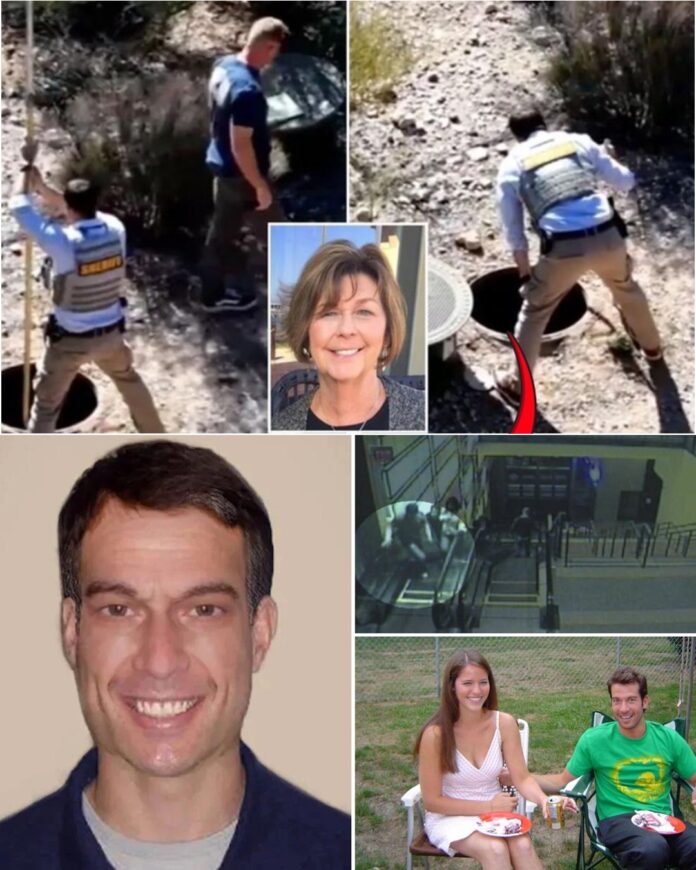
For years, the disappearance of Brian Shaffer has remained one of the most unsettling mysteries in modern American missing-person investigations. What makes the case so disturbing is not simply that a young man vanished, but that the moment before his disappearance appears to have been captured on surveillance cameras inside a crowded nightlife district in Columbus.
On the night of March 31, 2006, Shaffer, a second-year medical student at Ohio State University, went out with friends to celebrate the end of exams. The group moved between several bars before eventually arriving at the popular campus venue Ugly Tuna Saloona, located inside the Gateway entertainment complex near the university district.
Like many nightlife venues, the entrance area of the bar was covered by security cameras. Footage recorded patrons coming and going throughout the night, documenting hundreds of people moving through the entrance. Among them was Brian Shaffer.
Shortly before 2 a.m., cameras captured Brian entering the bar with friends. At one point during the evening he stepped outside the entrance area and briefly spoke with two women near the escalator landing. The interaction appeared casual. After a few seconds, he turned and walked back into the bar.
Investigators would later study that brief sequence of video more than almost any other moment in the case.
Because it was the last confirmed image of Brian Shaffer ever recorded.
When Brian failed to meet friends the next day and did not answer calls from family, concern quickly grew. Police began reconstructing his movements from the night before, starting with surveillance footage from the Gateway complex. Detectives reviewed hours of video from multiple cameras monitoring the entrance and escalator area leading to the bar.
What they discovered made the case famous among investigators and true-crime researchers.
Despite the extensive video coverage, police could not find a single frame showing Brian leaving the bar.
Every other person seen entering that section of the building eventually appeared again on camera exiting through the same monitored path. Brian did not. To investigators reviewing the footage, it looked as though he had simply walked inside and then disappeared.
One theory suggested that Brian may have left through a back corridor or construction area within the building. At the time, parts of the Gateway complex were undergoing renovation, and workers had access to service hallways not normally used by customers. Detectives explored this possibility and even searched unfinished sections of the structure, but no evidence indicated that Brian had gone through those areas.
Another possibility was that he had somehow slipped past cameras during a crowded moment when patrons were entering and leaving simultaneously. Investigators acknowledged that surveillance systems are not perfect and that blind spots can exist. Still, the absence of any clear image showing him leaving remained deeply puzzling.
For years, the surveillance clip showing Brian’s final moments circulated among investigators and journalists. The most haunting part of the footage is its ordinariness. Nothing appears unusual in the seconds before he turns and walks back inside the bar. No argument, no sign of distress, no indication that something dangerous is about to happen.
Just five quiet seconds — and then nothing.
The mystery has occasionally been compared to other unexplained disappearances, including the case of Nancy Guthrie in Tucson. In her case, investigators also encountered a timeline that seemed to collapse at a single moment. Guthrie was last known to be inside her own home, yet when authorities later checked the residence, there were no clear signs explaining how or when she left.
In both cases, investigators faced the same unsettling problem: environments that should have produced evidence instead produced silence.
A crowded bar filled with witnesses and cameras.
A quiet house filled with personal belongings.
Yet in both places, the trail stopped suddenly.
Nearly two decades later, the disappearance of Brian Shaffer remains unsolved. His case continues to be discussed by investigators and true-crime researchers because of the strange contradiction at its center: a man clearly recorded entering a building, surrounded by people and surveillance cameras, yet somehow never recorded leaving.
And every time investigators replay the final seconds of that surveillance clip, the same question returns.
What happened in the moments just after Brian Shaffer walked back inside?