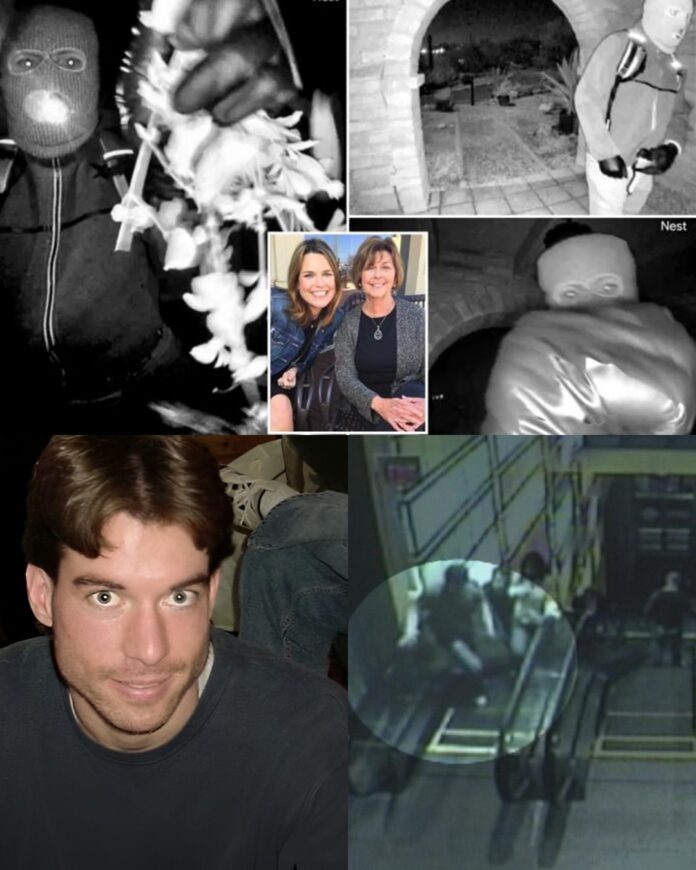
When investigators reviewing the disappearance of Nancy Guthrie searched for comparable cases, one file repeatedly surfaced during discussions among detectives and researchers. The circumstances were different, the people involved had never met, and the locations were hundreds of miles apart. Yet the investigative pattern felt disturbingly familiar: a person enters an ordinary environment filled with witnesses and surveillance cameras — and then vanishes as if a crucial moment simply disappeared from reality.
That other case involved Brian Shaffer, a medical student who vanished during a night out in Columbus in 2006.
At the time, Shaffer was a second-year student at Ohio State University. On the night of March 31, he went out with friends to celebrate the end of exams. Like many students in the university district, they eventually ended up at a popular nightlife spot called Ugly Tuna Saloona.
The bar was busy that night. Music, crowds, and the constant movement of people filled the entrance area. Surveillance cameras positioned near the escalator and entrance captured patrons arriving and leaving throughout the night.
Among those recorded entering was Brian Shaffer.
Shortly before 2 a.m., the cameras clearly show him arriving with friends. At one point he steps outside the entrance area and speaks briefly with two women. The interaction lasts only a few seconds. Nothing about it appears unusual or tense. Afterward, Brian turns around and walks back into the bar.
Those few seconds of footage would later become some of the most analyzed surveillance images in a missing-person investigation.
Because after Brian walked back inside, no camera ever recorded him leaving.
Police later examined hours of footage from the building. The entrance to the bar was located at the top of an escalator, and the path most customers used to leave was covered by cameras. Investigators tracked hundreds of people entering and exiting the location throughout the night.
But Brian Shaffer never appeared again.
The discovery stunned detectives. In most missing-person cases, investigators eventually locate some form of exit point — a camera frame, a witness, or even a brief sighting that extends the timeline. Here, the timeline seemed to stop completely.
One explanation considered early in the investigation was that Brian might have left through an alternate route. At the time, sections of the Gateway complex were undergoing renovation, and construction workers had access to service corridors not normally used by customers. Detectives searched these areas and interviewed workers to determine whether he could have slipped into an unfinished section of the building.
But no physical evidence suggested that had happened.
Another theory was that the crowded environment allowed Brian to leave during a moment when camera views were obstructed. Surveillance systems sometimes have blind spots or angles that miss brief movements in large crowds. Investigators acknowledged that possibility, though they never identified a clear sequence showing how he could have exited unnoticed.
Years later, the surveillance clip showing Brian’s final moments continues to circulate among investigators studying unexplained disappearances. What makes it so haunting is the normality of the scene. People laugh, talk, and move through the entrance area like any other night at a busy college bar.
And then Brian Shaffer walks back inside.
That is the final confirmed moment of his timeline.
When detectives later compared the case with the disappearance of Nancy Guthrie in Tucson, the similarities were subtle but unsettling. In Guthrie’s case, investigators also encountered a timeline that ended abruptly inside a familiar environment — her own home. Personal belongings remained behind, suggesting she had not intended to leave permanently.
In both investigations, the problem confronting detectives was the same: the moment when evidence should appear is the exact moment when it disappears.
A crowded bar full of cameras.
A quiet house full of personal details.
Two places that should have produced answers — yet instead produced silence.
And years later, the files of Nancy Guthrie and Brian Shaffer still sit among the most perplexing missing-person mysteries investigators continue to study.